

Three scores. Every one of them traceable.
Vitality+ turns wearable signals into three scores anyone can read: activity, readiness and sleep, with stress and heart rate alongside. Weight, BMI and blood tests are added by the person.
What each number is made of.
- ReadinessHow ready the body is today, built from resting heart rate, heart-rate variability (HRV) balance, recovery index, sleep quality, sleep balance, sleep regularity, activity balance and the previous day's activity.
- SleepA complete picture of how much and how well you sleep: total duration, efficiency, time taken to fall asleep, REM sleep, deep sleep and quality of rest.
- ActivityMovement against the person's own goals, not a population standard: staying active through the day, meeting daily targets, training frequency and training volume.
- Heart rateHeart rate as the wearable measures it. A reading, not a score.
- StressEstimated from HRV and heart rate, then read against activity, so the app can tell workout stress from everyday stress. Stress from exercise counts as positive.
Each score runs from 0 to 100 with a plain-language label. Weights are proprietary and tuned to each person's baseline.
Where the data comes from.
The wearable.
The V+ ring or band, or the person's own wearable: sleep, heart rate, heart-rate variability and activity, from the device they choose.
The person.
Weight and height for BMI, and optional blood tests as a PDF or a photo.
Reviewed by clinicians.
Our medical advisors
The physicians and nutritionists who review the score formulas, the nutrition plans (calories, protein and more, set from each person's questionnaire) and the blood test ranges before every release.
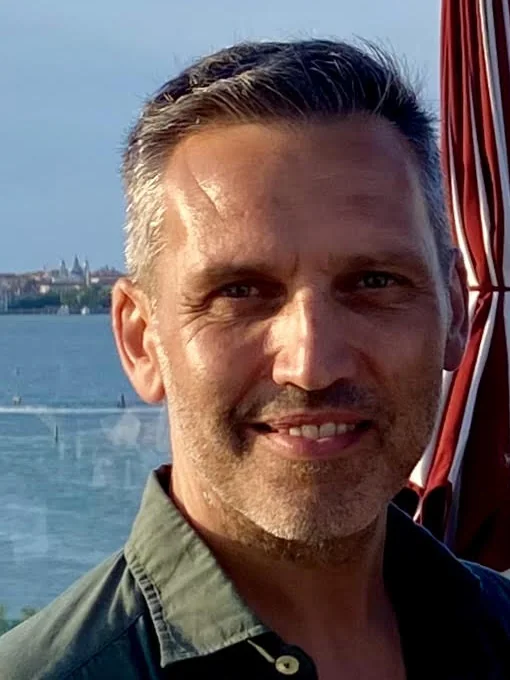
Paolo AlbaneseMedical doctor, geriatrics and gerontology
Specialist in geriatrics and gerontology and senior physician at Azienda ULSS 3 Serenissima in Dolo, Venice, where he cares for frail older adults and the clinical complexity of ageing. He collaborates with several universities and has contributed to scientific publications on osteoporosis, cognitive decline and gerontology. Through the Open Academy of Medicine he has explored models for assessing body composition and psychophysical resilience, with a particular interest in predictive and personalised medicine. Alongside medicine he studies art and music, convinced that ageing cannot be understood through biology alone.